

Time is the only thing every human being has in equal measure. Rich or poor, busy or idle, you get the same 24 hours as everyone else. So, it’s no surprise that our language is absolutely packed with phrases about time expressions that capture urgency, nostalgia, regret, hope, and everything in between.
Here’s the thing, though. Most articles on this topic just dump 50 quotes and call it a day. You deserve better than that. This guide digs into the real meaning behind the most powerful phrases about time, traces where they came from, and shows you how to use them in conversation, in writing, and in life.
Why Phrases About Time Are Unlike Any Other Expressions
Think about it: we say time flies, but we also say we kill time. We save time but we also spend it. We’re pressed for time one moment and have all the time in the world the next. The English language treats time like water sometimes it rushes, sometimes it drags, and somehow, it’s always slipping through your fingers.
That contradiction is exactly what makes time quotes in English so rich. They don’t just describe a clock. They capture human emotions, the anxiety of a deadline, the warmth of a memory, the sting of a missed opportunity.
Linguists have noted that English has over 80 idiomatic expressions containing the word “time” alone more than almost any other single noun in the language. That’s not a coincidence. Time is the currency of existence, and we’ve invented hundreds of ways to talk about spending it.
Everyday Phrases About Time
Phrases That Show Time Moving Fast
Some of the most vivid phrases about time describe that stomach drop feeling of watching the clock race.
- “Time flies” This one traces back to the Latin tempus fugit, used by the Roman poet Virgil over 2,000 years ago. Today, we usually tack on “when you’re having fun” but Virgil’s original line carried a much darker weight. Time doesn’t fly because you’re enjoying yourself. It flies regardless.
- “In the blink of an eye” A blink takes roughly 150 to 400 milliseconds. Using it as a metaphor for time passing fast is almost comically accurate. Blink, and your kids are teenagers. Blink again, and they’re moving out.
- “Before you know it” Rooted in the psychology of inattentional blindness. We’re so focused on one thing that time sneaks past us. Parents use this phrase constantly. So do dentists, weirdly.
- “The years slip by” There’s something quiet and melancholy about “slip.” Not a crash. Not a rush. Just a slow, steady loss you barely notice until you look back.
Phrases That Show Time Moving Slowly
On the flip side, sometime quotes capture that misery of waiting.
- “Time drags on” Boredom distorts time perception. Research from psychology journals confirms that the more attention you pay to time, the slower it seems to move. Waiting for a flight? You feel it every minute.
- “It feels like forever” Emotional time and clock time are completely different things. Five minutes waiting for bad news can feel longer than five hours doing something you love.
- “The days are long, but the years are short” Often associated with parenting, this phrase captures a truth that almost no one prepares you for. Exhausting Tuesdays in slow motion. But somehow, five years vanish in what feels like a season.
Phrases About Making the Most of Time

These are the expressions with something to say. They carry a message: the clock is running, and you’re the one choosing how to spend it.
The “Carpe Diem” Family of Phrases
“Seize the day.” Horace, Odes (23 BC)
The Roman poet Horace wrote carpe diem over 2,000 years ago, but most people learned it from Robin Williams in Dead Poets Society (1989). The phrase exploded back into mainstream culture after that film and it’s never really left.
Here’s the full line most people don’t know: “Seize the day, put very little trust in tomorrow.” It’s not motivational-poster fluff. It’s a warning.
Other phrases in this family:
| Phrase | Origin | Core Message |
| Strike while the iron is hot | Blacksmithing trade, 16th century | Act when conditions are right |
| Make hay while the sun shines | Agricultural England, Middle Ages | Use favorable conditions before they change |
| Now or never | Latin proverb nunc at kumquat | Urgency without delay |
| The time is ripe | Harvest metaphor | Optimal timing has arrived |
Phrases About Not Wasting Time
“Time is money” is perhaps the most consequential phrase about time ever written. Benjamin Franklin wrote “Remember that time is money” in his 1748 essay “Advice to a Young Tradesman.” In that essay, he argued that every idle hour costs you the wages you could have earned making laziness a literal financial loss.
That idea fundamentally shaped how the modern world thinks about productivity. And not always for the better.
Stephen R. Covey reframed this beautifully: “The key is in not spending time, but in investing it.” Spending suggests consumption. Investing suggests return. Same 24 hours completely different philosophy.
Other no-nonsense value of time quotes worth knowing:
- “Lost time is never found again.” Benjamin Franklin
- “You may delay, but time will not.” Benjamin Franklin
- “Every second counts” used in sports, medicine, and unfortunately, hustle culture, where it becomes a source of anxiety rather than motivation
Phrases About Procrastination
Here’s the uncomfortable truth: most people are experts at time related vocabulary and terrible at using their time well.
- “I’ll do it tomorrow” The procrastinator’s national anthem. Franklin had a sharp response: “Tomorrow, every fault is to be amended; but that tomorrow never comes.”
- “Kicking the can down the road” Originally a political phrase for postponing difficult decisions. Now used everywhere from project management to personal finance.
- “There’s no time like the present” First recorded in print in 1562. It’s been fighting procrastination for over 450 years and clearly hasn’t won yet.
Philosophical Phrases About Time That Actually Go Deep

These are the deep time quotes the ones that make you put down your phone for a second.
What the Stoics Understood About Time That We’ve Forgotten
The Stoic philosopher Seneca wrote what might be the most insightful thing anyone has ever said about time and he wrote it almost 2,000 years ago.
“It is not that we have a short time to live, but that we waste a lot of it.” Seneca, On the Shortness of Life
Read that again. Seneca’s argument wasn’t that life is short. His argument was that life is long if you stop wasting it. He wrote: “Life is long enough, and a sufficiently generous amount has been given to us for the highest achievements if it were all well invested.”
The Roman emperor and philosopher was also one of the wealthiest men in Rome. And yet he consistently ranked time above money, arguing that people guard their fortunes carefully while squandering their hours carelessly.
Short deep quotes from ancient thinkers worth memorizing:
- “Time is the wisest counselor of all.” Pericles
- “The two most powerful warriors are patience and time.” Leo Tolstoy
- “Time is a sort of river of passing events.” Seneca
- “An inch of time is an inch of gold, but you can’t buy that inch of time with an inch of gold.” Ancient Chinese proverb
“This Too Shall Pass” A Case Study in Time Wisdom
Few phrases travel through time as gracefully as “this too shall pass.” Its origins trace back to Persian Sufi poets, likely from the 9th–11th century. It spread through Hebrew literature, appeared in a 13th century Persian manuscript, and eventually reached Abraham Lincoln, who referenced it in an 1859 speech.
Lincoln called it “an adornment to an Eastern monarch’s ring” a phrase that was true in times of success (keeping you humble) and in times of failure (keeping you going).
That’s the genius of it. It works in both directions.
Time Phrases in the Workplace, The Ones You Use Every Day
Time management quotes are everywhere in offices, but the phrases themselves are even more pervasive. Here’s what you’re saying when you use workplace time expressions:
The Hidden Meanings Behind Office Time Phrases
| Phrase | What You Say | What It Often Means |
| “Let’s circle back” | I’ll revisit this later | I need to end this conversation now |
| “Time-sensitive” | This is urgent | Please respond faster than usual |
| “Clock is ticking” | Deadline pressure | I’m anxious and I’m sharing that with you |
| “ASAP” | As soon as possible | Right now, please |
| “Let’s table this” | (US) Postpone it / (UK) Discuss it now | Be careful — these mean the opposite depending on where you are |
That last one is genuinely important. An American saying “let’s table this” means they want to delay a decision. A British person saying the same phrase expects a discussion to start immediately. Miscommunication over this phrase has derailed real meetings.
“Just in Time” When a Time Phrase Runs a Global Industry
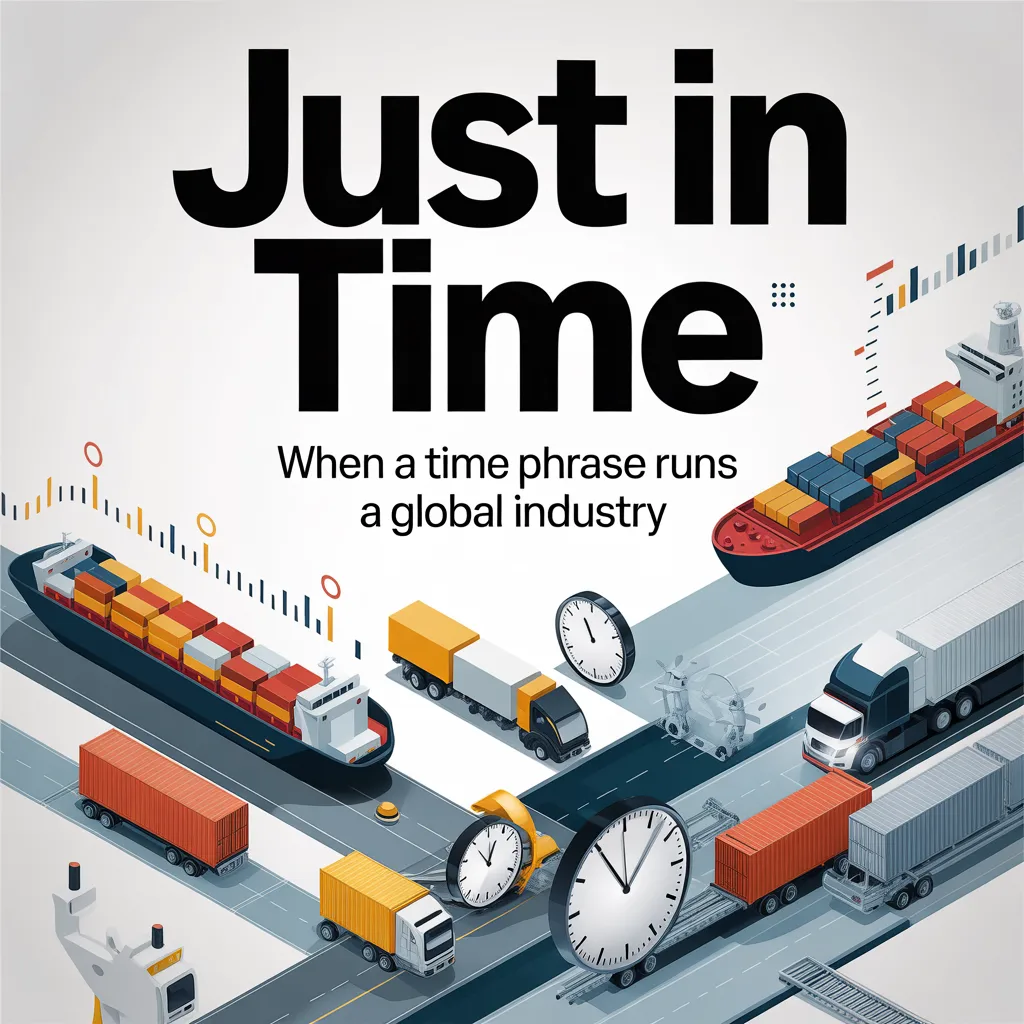
Most people don’t realize the phrase “just in time” isn’t just casual English. It’s the name of a manufacturing philosophy “Just-in-Time (JIT) production” developed by Toyota in the 1970s. The system eliminates inventory waste by ensuring materials arrive exactly when they’re needed. Not before. Not after.
Toyota’s JIT system transformed global manufacturing and is now used by companies from Apple to Amazon. A time phrase, quite literally, changed how the world makes things.
Famous Phrases About Time from History and Literature
Some of the most enduring time quotes come from writers and thinkers who understood that time was the real subject of almost every story.
| Phrase | Source | Why It Endures |
| “Lost time is never found again” | Benjamin Franklin | Simple, brutal, true |
| “Time flies over us, but leaves its shadow behind” | Nathaniel Hawthorne | Memory as time’s residue |
| “Your time is limited don’t waste it living someone else’s life” | Steve Jobs, 2005 Stanford Commencement | Modernity’s carpe diem |
| “Time is what we want most, but what we use worst” | William Penn | 17th century wisdom, still relevant |
| “The only reason for time is so that everything doesn’t happen at once” | Albert Einstein | Scientific wit that lands philosophically |
| “All we have to decide is what to do with the time that is given us” | J.R.R. Tolkien, The Fellowship of the Ring | Agency within limitation |
Looking Back: Nostalgia in Four Words
- “Those were the days” Four words that carry an entire world. Warmth, loss, and the knowledge that you probably didn’t appreciate at the time.
- “Back in the day” Informal but loaded. It’s less about facts and more about feeling.
- “That ship has sailed” Opportunity that’s gone. No second chances. The image of a ship disappearing over the horizon is quietly devastating.
- “Water under the bridge” The healthy counterpart to “that ship has sailed.” Both acknowledge the past. But this one lets it go.
Living Now: The Present Tense Phrases
- “In the moment” The mindfulness movement turbocharged this phrase in the 2010s. What was once a casual expression becoming a wellness philosophy.
- “As we speak” Real-time emphasis. Used in news, politics, and tense conversations.
- “At this point in time” Often criticized as filler (redundant at this point already implies time). Use it only when the moment itself is what you’re emphasizing.
Looking Forward: Future Tense Phrases
- “Only time will tell” The ultimate hedge. Used by politicians, scientists, and anyone trying to avoid committing to a prediction.
- “Down the road” Deliberate vagueness. When you say, “down the road,” you’re signaling future intent without locking yourself into a timeline.
- “In due time” A phrase of patience. Its origins straddle both religious (“all things in God’s time”) and secular (“your turn will come”) usage.
How to Use Phrases About Time Without Sounding Like a Cliché
This is the section where most articles skip. Knowing these phrases is one thing. Using them well is another.
Three rules that separate a sharp writer from a lazy one:
1. Context is everything:
Saying “time heals all wounds” to someone who just lost a parent isn’t comforting it’s dismissive. The phrase is true over years. It’s tone deaf in the first week.
2. Originality beats recognition:
The best writers don’t lean on the most famous time quotes they find the less-known ones. “Time is a file that wears and makes no noise” (English medieval proverb) lands harder than the tenth carpe diem reference.
3. Pair phrases with specifics:
A time phrase on its own is generic. Paired with a concrete detail, it becomes vivid. “The years slip by” is forgettable. “The years slip by, and one day you realize the music you grew up with is now playing in grocery stores” that sticks.
Quick-Reference: 50 Essential Phrases About Time by Category
Time Moving Fast
- Time flies / Time flies when you’re having fun
- In the blink of an eye
- Before you know it
- Here today, gone tomorrow
- A mile a minute
Time Moving Slowly
- Time drags on / Time crawls
- It feels like forever
- Watching paint dry
- The days are long, but the years are short
Urgency and Deadlines
- The clock is ticking
- Working against the clock
- In the nick of time
- Beat the clock
- Time is of the essence
- It’s crunch time
Wasting Time
- Kill time
- While away the hours
- Losing track of time
- Kicking the can down the road
- Burning daylight
Making Good Use of Time
- Seize the day
- Strike while the iron is hot
- Make hay while the sun shines
- Time is money
- Every second counts
- Ahead of time
Phrases About the Past
- Those were the days
- Back in the day
- Once upon a time
- Water under the bridge
- That ship has sailed
- Turn back the hands of time
Phrases About the Future
- Only time will tell
- In due time
- Down the road
- All in good time
- The best is yet to come
Patience Phrases
- Bide your time
- All in good time
- This too shall pass
- Good things come to those who wait
- In due course
Key Takeaways
You’ve been using phrases about time your whole life. Hopefully, now you know why they work and what they’re really saying.
The best quotes on time aren’t decorations. They’re compressed with wisdom. When Seneca said life isn’t short, it’s wasted, he wasn’t writing a productivity tip. He was making an argument about what it means to be alive.
When Benjamin Franklin wrote “lost time is never found again,” he wasn’t being clever. He was issuing a warning he’d clearly thought hard about.
And when you say “time flies” know that a Roman poet said the same thing to remind himself that the clock doesn’t slow down for anyone. Not 2,000 years ago. Not now.
Use your time well. That’s what all these phrases have been saying, across every century and every culture, all along.
Frequently Asked Questions About Phrases About Time
What is the most common phrase about time?
“Time flies” is the most widely used phrase about time in English. It traces back to the Latin tempus fugit, used by the Roman poet Virgil over 2,000 years ago.
What is a phrase that means time is valuable?
“Time is money.” Benjamin Franklin coined it in 1748. It’s still the sharpest reminder that every wasted hour has a real cost.
What are some short deep time quotes?
A few worth remembering:
- “Lost time is never found again.” Benjamin Franklin
- “Time is the wisest counselor of all.” Pericles
- “The two most powerful warriors are patience and time.” Leo Tolstoy
What phrases mean don’t waste time?
- “There’s no time like the present”
- “Strike while the iron is hot”
- “Don’t let the grass grow under your feet”
- “Burning daylight”
What does “this too shall pass” mean?
It means every situation good or bad is temporary. The phrase originates from ancient Persian poetry and was famously referenced by Abraham Lincoln in 1859.
What is a phrase about time moving fast?
“In the blink of an eye.” A blink takes just 150–400 milliseconds making it one of the most accurate speed metaphors in the English language.
What are common time management quotes?
- “You may delay, but time will not.” Benjamin Franklin
- “It is not that we have a short time to live, but that we waste a lot of it.” Seneca
- “The key is not spending time, but investing it.” Stephen R. Covey
What does “in the nick of time” mean?
It means just barely making it before it’s too late. The phrase has medieval origins “nick” once referred to a precise notch or critical point.
What is a phrase about learning from the past?
“Water under the bridge” it means past events are done and shouldn’t be dwelt on. Pair it with “those were the days” for a fuller picture of how we talk about the past.
Why do so many time phrases come from farming?
Most English idioms were born between the 12th and 17th centuries when people worked the land. Phrases like “make hay while the sun shines” were literal farming instructions before they became life advice.
Read more grammar lessons on GrammarRelay
Final Thoughts
Every phrase about time whether it’s Seneca’s stoic warning, Benjamin Franklin’s capitalist calculus, or your grandmother’s gentle reminder to “not let the grass grow under your feet” circles back to the same uncomfortable truth. The clock runs in one direction. You decide what happens while it does.
That’s not a new idea. It’s probably the oldest idea. And yet, generation after generation rediscovers it, packages it in a new phrase, and passes it on.
What’s remarkable is how much these expressions still resonate. “Tempus fugit” time flies was carved into sundials in ancient Rome. Two thousand years later, it still shows up on Instagram captions and graduation speeches. Some truths are so fundamental that no era has figured out how to make them obsolete.
The phrases in this article aren’t just vocabulary. They’re a kind of compressed wisdom lessons learned the hard way, shrunk down to a few words so they’d be easy to carry and easy to remember. The best of them reward attention. Read them slowly. Think about when you’ve felt them.
And the next time someone tells you “There’s no time like the present” know that a 16th-century writer felt exactly the same urgency you’re feeling now. Some things never change. Time passing is one of them.
How we spend our days is, of course, how we spend our lives. Annie Dillard
