

“Get well soon.” Three words. Said millions of times a day in cards, texts, emails, and awkward hallway conversations. It’s kind. It’s classic. But here’s the problem: it’s also become so automatic that it barely registers anymore.
Worse? For some people, it’s the wrong thing to say entirely. Tell someone with a chronic illness to “get well soon” and you’ve accidentally implied their condition is something they can simply shake off. That’s not comfort that’s pressure wrapped in good intentions.
Knowing other ways to say get well soon phrases that actually match the moment makes all the difference. So here’s a comprehensive guide covering every situation, relationship, and tone you might need.
Why “Get Well Soon” Sometimes Misses the Mark
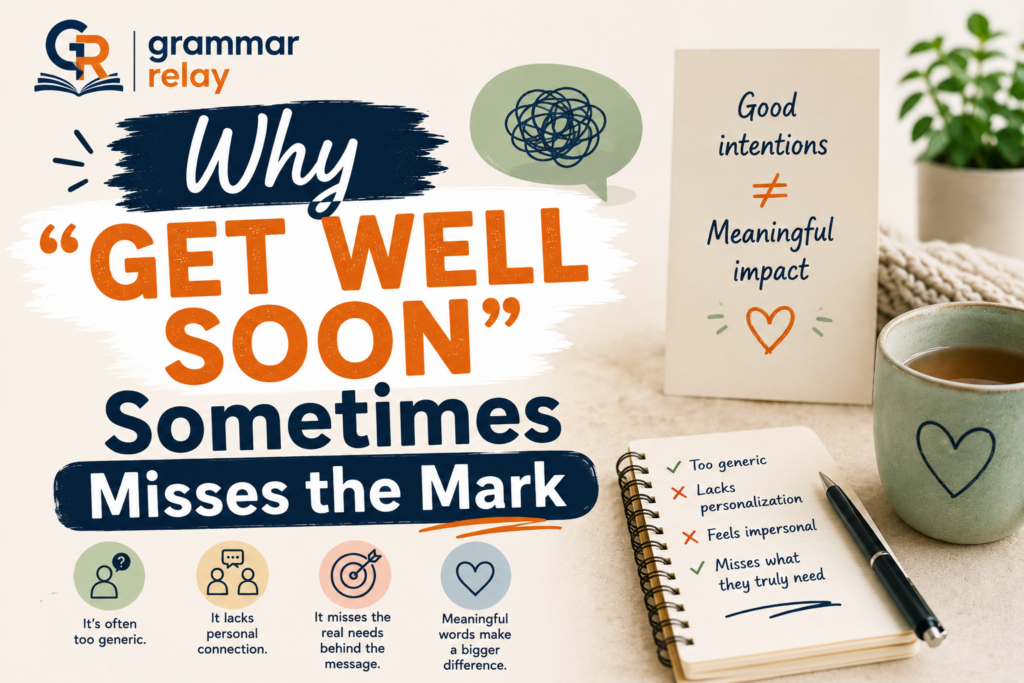
Here’s something most people don’t consider: the phrase assumes recovery is coming. Fast. That works fine for a cold or a sprained ankle. But for someone facing surgery, a serious diagnosis, or a long-term health condition, “get well soon” can feel tone-deaf even dismissive.
A 2021 study published in Health Communication found that people with chronic illness frequently report feeling misunderstood by well-meaning supporters who use recovery-focused language. The intention is warmth. The impact is sometimes the opposite.
The fix isn’t complicated. It just requires one extra second of thought before you reach for the default phrase.
What to Consider Before Choosing Your Words
Before you type anything, ask yourself four quick questions:
- Who is this person to you? A close friend gets something different than a coworker.
- What are they dealing with? A minor cold vs. major surgery vs. a long-term condition each needs a different tone.
- What do they need right now? Humor, warmth, practical support, or simply acknowledgment?
- Would you say this to their face? If it sounds hollow out loud, it reads hollow on paper.
Get those four things right and almost any phrase lands well.
Professional Ways to Say “Get Well Soon”
The workplace adds a layer of complexity. You want to show genuine care but also respect boundaries nobody wants their medical situation turned into office gossip.
Here’s what works in professional emails, cards, and workplace messages:
| Phrase | Formality Level | Best Used For |
|---|---|---|
| Wishing you a speedy recovery | Formal | Emails, professional cards |
| Hope you’re back to full strength soon | Semi-formal | Colleagues you know well |
| Please focus on resting — everything here is covered | Semi-formal | Direct reports, close teammates |
| Take all the time you need to heal | Semi-formal | Any workplace relationship |
| We’re thinking of you and wishing you well | Formal | Group cards, team emails |
| Looking forward to seeing you back when you’re ready | Casual-professional | Close colleagues |
| Wishing you strength and comfort during your recovery | Formal | Serious illness, surgery |
| Wishing you renewed health and energy | Formal | General professional use |
Example in action:
“Hi James, just heard you’re taking some time to recover. Please don’t worry about anything on this end. Wishing you a smooth recovery and looking forward to having you back when you’re feeling up to it.”
That message does three things: it relieves work pressure, expresses genuine care, and sets zero expectations. That’s the sweet spot for professional get well messages.
Heartfelt Alternatives for Close Friends and Family
With people you love, drop the formality entirely. These phrases carry real emotional weight:
- “I’m here for whatever you need, just say the word.”
- “Sending you so much love as you heal.”
- “Please rest. Everything else can wait.”
- “You don’t have to be strong right now.”
- “Heal at your own pace, no rush whatsoever.”
- “I’m thinking about you more than you know.”
- “Wishing you comfort, peace, and gentle healing.”
- “You’ve got an army of people rooting for you.”
The feel better soon meaning behind these phrases goes deeper than the surface words. They say: I see you. I’m not going anywhere. Take your time.
That’s what people actually need to hear when they’re unwell.
“Too often we underestimate the power of a touch, a smile, a kind word, a listening ear, an honest compliment, or the smallest act of caring.” Leo Bus Caglia
Read more about 40+ Other Ways to Say “Take Care”
What to Say Instead of “Get Well Soon” for Serious or Chronic Illness
This is where most people get it wrong. And it matters enormously.
When someone has a chronic condition, lupus, MS, fibromyalgia, long COVID, cancer telling them to get well soon implies a finish line that may not exist. It can make them feel like a burden for not recovering faster.
Here’s how to say get well soon in other words for serious or ongoing illness:
- “I’m here for the long haul, not just the tough days.”
- “Wishing you more good days than hard ones.”
- “You don’t have to get better fast. Just get better.”
- “Sending strength for whatever today looks like.”
- “I know this is a marathon, not a sprint, I’m cheering you on the whole way.”
- “Wishing you moments of real relief and peace.”
- “Hope today is a little easier than yesterday.”
These phrases acknowledge reality without sounding hopeless. That balance honest but hopeful is exactly what someone facing a long road needs.
Funny & Lighthearted Get Well Messages (When Humor Helps)
Sometimes laughter really is the best medicine. Research from Mayo Clinic confirms that laughter reduces stress hormones, boosts immune function, and improves mood. So a well-timed joke isn’t just fun it’s genuinely helpful.
The key word there is well-timed. Humor works with close friends who appreciate it. It falls flat or worse, feels dismissive with serious diagnoses or people you don’t know well.
When the moment is right, try these:
- “Feel better soon, I need someone to complain to.”
- “Heal fast. The group chat isn’t the same without you.”
- “Rest up so you can get back to being annoying, we miss it.”
- “Doctor’s orders: rest, soup, and absolutely zero responsibilities.”
- “Get well soon. Or take your time. Either way, snacks are waiting.”
- “Your body said ‘sit down’, so sit down. We’ll be here.”
Get Well Messages for Specific Situations
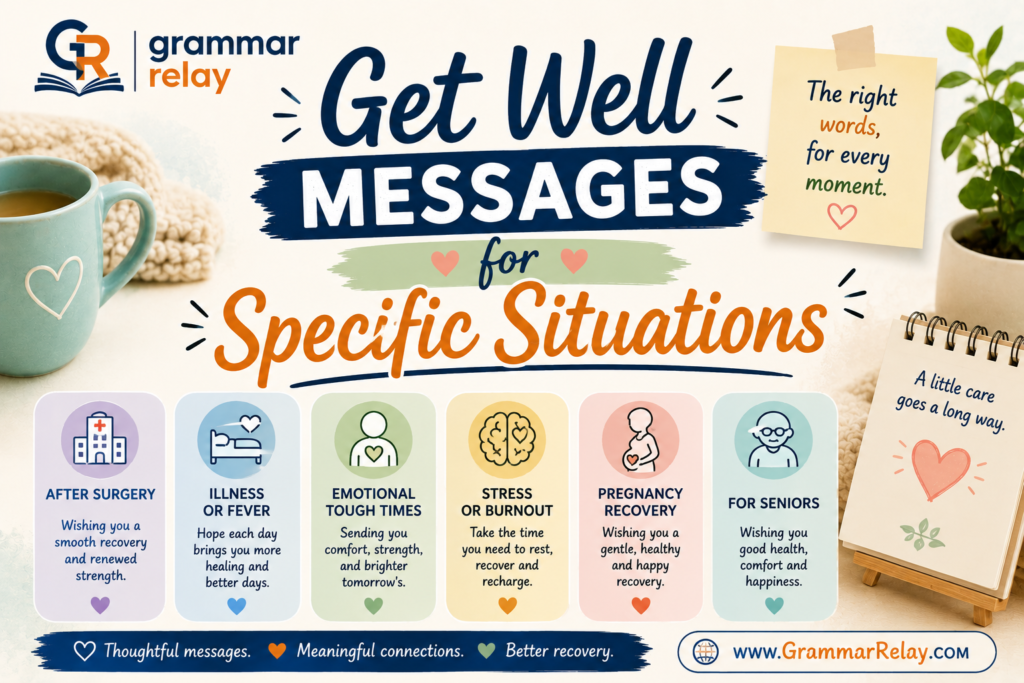
For a Colleague or Coworker
Keep it warm but professional. Don’t reference medical details you weren’t directly told and don’t make promises the company can’t keep.
- “Wishing you a smooth and restful recovery the office will be here when you’re ready.”
- “Please focus on getting better. Everything on your end is taken care of.”
For Someone Who Just Had Surgery
Surgery is physically and emotionally exhausting. Acknowledge both:
- “Wishing you a gentle recovery take it one day at a time.”
- “Sending healing thoughts your way. Rest as long as you need to.”
- “Surgery is no small thing. Be patient with yourself as you heal.”
For Someone With a Mental Health Condition
This is perhaps the most important section. The other term for get well soon simply doesn’t translate to mental health struggles. “Get well soon” implies someone is temporarily broken and that framing does real damage.
Instead, try:
- “I see you and I’m here, no expectations, just support.”
- “You don’t have to have it together right now. I’ve got you.”
- “There’s no timeline on this. I’m not going anywhere.”
- “You matter to me, full stop. Not just when you’re okay.”
For a Child Who Is Sick
Keep it playful, light, and age-appropriate:
- “Rest up, superhero. You’ll be back in action before you know it.”
- “Even superheroes need a rest day. Yours is today!”
For Someone Grieving or Emotionally Unwell
Grief isn’t an illness and get well fast meaning doesn’t apply here at all. What grieving people need is presence, not positivity:
- “There’s no timeline on grief. I’m here for all of it.”
- “You don’t have to be okay right now. Just let me be here.”
- “I’m not going to tell you it’ll be fine. I’m just going to sit with you.”
For a Get Well Card (Short One-Liners)
Sometimes a card needs just one punchy line:
- “Sending love and soup energy your way.”
- “Rest now. Conquer later.”
- “Healing looks good on you, keep going.”
- “Rooting for you, always.”
Get Well Soon Phrases Around the World
It’s worth knowing the get well soon other term equivalents globally especially if you’re reaching out to someone from a different culture:
| Language | Phrase | Literal Meaning |
|---|---|---|
| Spanish | Que te mejores pronto | May you get better soon |
| French | Prompt rétablissement | Speedy recovery |
| German | Gute Besserung | Good improvement |
| Italian | Guarisci presto | Heal soon |
| Japanese | Odaiji ni | Please take care of yourself |
| Arabic | Salamtak / Salamtik | May you be safe and healthy |
| Portuguese | Melhoras | Get better |
Interestingly, Japanese uses Daija specifically for illness it carries a tenderness that the English phrase doesn’t always convey. Some cultures also prioritize showing up in person or bringing food over sending a message. Worth keeping in mind.
You might be interested in 30+ Good Afternoon Phrases
What NOT to Say to Someone Who Is Sick
Some well-meaning phrases actually make things worse. Here’s what to avoid:
| What You Said | Why It Misses | Say This Instead |
|---|---|---|
| “Get well soon!” to someone with chronic illness | Implies recovery is simple and imminent | “Wishing you more good days than hard ones” |
| “Everything happens for a reason” | Dismissive and tone-deaf | “I’m so sorry you’re going through this” |
| “You’ll be fine!” | Minimizes real fear and pain | “Whatever happens, I’m right here” |
| “Let me know if you need anything” | Too vague people rarely follow up | “I’m bringing dinner Thursday does 6 PM work?” |
| “At least it’s not worse” | Comparative suffering helps nobody | “This is really tough and you’re handling it so well” |
How to Write a Get Well Card That Actually Means Something
Most get well cards say a lot and communicate very little. Here’s a simple framework that works every time:
- Add one personal detail: something specific to them
- Start with acknowledgment: not forced positivity
- Offer something concrete: not “let me know if you need anything”
- Close with warmth: no pressure, no timeline
Template:
“Hey [Name], I heard you’re going through something tough right now and I just want you to know I’m thinking about you. Rest as long as you need. I’ll [specific offer bring food, walk the dog, handle X]. Sending you so much love.”
Other Ways to Say “Get Well Soon” by Situation
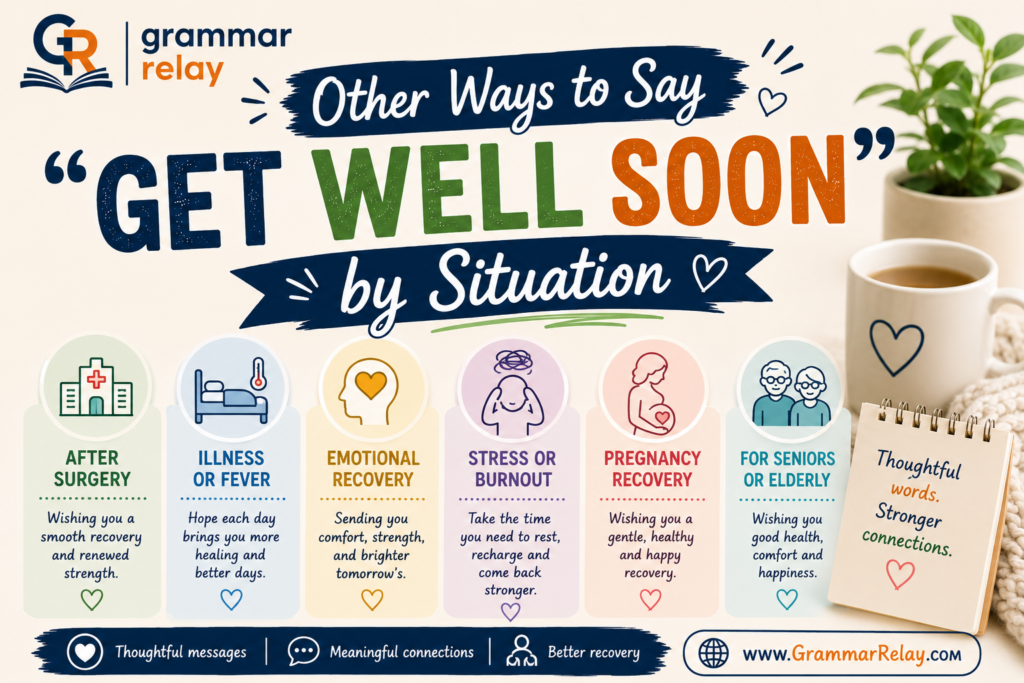
| Situation | Best Phrase |
|---|---|
| Professional email | “Wishing you a speedy recovery” |
| Close friend after surgery | “Heal at your own pace, I’m here” |
| Colleague workplace card | “Focus on resting, we’ve got things covered” |
| Chronic illness | “Wishing you more good days than hard ones” |
| Mental health support | “I see you and I’m here, no pressure” |
| Child who is sick | “Rest up, superhero, feel better fast!” |
| Funny message to a friend | “Heal fast. The group chat needs you” |
| Grief or emotional pain | “No timeline. I’m here for all of it” |
Frequently Asked Questions
Is “Get Well Soon” appropriate for serious illness?
Not always. For major diagnoses or chronic conditions, it can unintentionally imply recovery is quick and simple. Try “Wishing you more good days than hard ones” or “I’m here for the long haul” instead both acknowledge reality without sounding hopeless.
What’s the most heartfelt alternative to “Get Well Soon”?
“Heal at your own pace, I’m here” and “You don’t have to be strong right now” carry the deepest emotional weight. They remove pressure and signal genuine, unconditional support.
What do you say to someone with a chronic condition?
Skip recovery-focused language entirely. Phrases like “Sending strength for whatever today looks like” or “I know this is a marathon, I’m cheering you on” acknowledge the long road without minimizing it.
How do you wish someone well professionally without being intrusive?
Keep it warm but boundary-aware. “Please focus on resting, everything here is covered” works perfectly. It shows care without prying into medical details or creating workplace awkwardness.
What should you never write in a get well card?
Avoid “Everything happens for a reason,” “You’ll be fine,” and “Let me know if you need anything.” All three minimize real pain or make vague promises. Be specific and be present instead.
Can these phrases work for mental health struggles too?
Absolutely, but choose carefully. “I see you and I’m here” or “There’s no timeline on this” work beautifully. Avoid anything that implies someone should simply cheer up or recover faster. Presence beats positivity every time.
Read more grammar lessons on Grammar Relay
Conclusion
Here’s the truth about get well messages: the words matter less than the intention behind them. A perfectly crafted phrase sent out of obligation lands flat. A simple, genuine message sent with real care lands exactly right.
Don’t overthink it. Pick a phrase that honestly reflects how you feel. Add one personal detail. Send it today because the people in your life who are struggling deserve to know someone’s thinking about them right now, not eventually.
