


Most advice fails. Not because it’s wrong but because it’s delivered badly. You’ve been there: someone unloads their problems, you offer a perfectly reasonable solution, and they get defensive, shut down, or worse, resent you for it.
Giving for advice well is genuinely one of the hardest interpersonal skills there is. Yet almost nobody thinks to learn it.
If you want to get more information about “Giving for Advice”, must read this article till the end!
Why Most Advice Backfires (And What’s Really Going On)
Here’s the uncomfortable truth: when you give someone advice they didn’t ask for, their brain registers it as a threat. A 2018 study published in the Journal of Personality and Social Psychology found that unsolicited feedback even when accurate and useful triggers a stress response in the receiver.
Why? Because advice implies a gap. It says, “You don’t know something I do.” Even delivered kindly, that lands as criticism.
There’s also a deeper issue. Most people giving advice are doing it to feel helpful not necessarily to be helpful. Those two things aren’t the same. One is about you. The other is about them.
The Two Types of Advice Know Which One You’re Giving
Not all advice is created equal. The type you’re giving shapes everything the tone, the timing, and how it lands.
Solicited Advice
This is advice someone actually asked for. They came to you. They said, “What do you think?” or “What would you do?”
Even here, there are rules. Just because someone asked doesn’t mean they want a lecture. Keep it focused. Keep it honest. And remember they’re still the one making the decision.
Unsolicited Advice
So what is unsolicited advice, exactly? The simple definition of unsolicited advice is this: guidance, opinions, or suggestions you offer when nobody asked.
What does unsolicited advice mean in practice? It means jumping in with “You should really try…” or “Have you considered…” when the other person just wanted to be heard.
Unsolicited comments whether about someone’s career, parenting, body, or relationships almost always create distance, not connection. The one exception? Genuine safety or urgency. If your friend is about to make a decision that could seriously harm them, speak up. Otherwise, ask yourself: Did they actually ask?
You might be interested in “Time Expression”
Why People Give Unsolicited Advice
Understanding why you’re giving advice is just as important as how you give it.
Genuinely Good Intentions
- Altruism You’ve been through something painful and want to spare them the same experience. This is the most defensible motive. But even altruism can miss the mark if you skip the listening step.
- Excitement Something worked beautifully for you and you can’t help sharing it. That enthusiasm is real. Channel it carefully.
- Friendliness Sometimes advice is just social bonding. It’s a way of saying “I’m invested in your life.” That intention is kind. The execution often isn’t.
Mixed or Unconscious Motives
- Neediness Giving advice makes you feel valuable. Needed. Important. That’s a human need, but it shouldn’t drive the conversation.
- Projection You’re actually working through your own unresolved issue by advising someone else. This one’s sneaky. It feels like help. It usually isn’t.
- Habit Some people are reflexive advice-givers. It’s just their default mode. No malice, just a bad pattern.
Harmful Motives
| Motive | What It Looks Like |
|---|---|
| Dominance | Advice used to establish authority or superiority |
| Judgment | “Advice” that’s really just thinly veiled criticism |
| Narcissism | Making the conversation about their own experiences and wisdom |
| Drama-seeking | Stirring the pot rather than offering real support |
If you recognize any of these in yourself good. Awareness is the first step.
How to Give Advice Well “The Rules That Actually Matter”
Ask Before You Advise
This is the single most important habit you can build. Before launching in, try:
“Would it be helpful if I shared what’s worked for me?”
Four seconds. That’s all it takes. And it changes everything because now you have permission. The other person feels respected. They’re no longer on the defensive.
Giving someone advice without asking first is like showing up uninvited to someone’s house. Even if you bring good food, it’s still an intrusion.
Listen First, Advise Second
Most people don’t want to be fixed. They want to feel understood.
Before you say a single word of advice, ask yourself: Have I actually heard what they’re dealing with? The 80/20 rule applies here listen 80% of the time, speak 20%.
Active listening means:
- Making eye contact
- Not planning your response while they’re still talking
- Asking questions that deepen understanding, not redirect the conversation
- Reflecting back what you heard before offering anything new
Make It About Them, Not You
Drop the “Well, when I went through something similar…” opener. That pivot however natural it feels immediately shifts focus to you.
Good advice is tailored. It accounts for their specific situation, their personality, their constraints. Generic advice that worked for you may be completely irrelevant to them.
Offer Options, Not Orders
There’s a meaningful difference between “You should do X” and “Some people find X helpful does that feel relevant to your situation?”
The first is a directive. The second preserves their autonomy. People are far more likely to act on advice they feel they chose than advice they feel was prescribed to them.
Know When to Stay Quiet
This one’s underrated. Sometimes the most powerful thing you can do is say nothing. Just be present. Let them process out loud without redirecting them toward a solution.
It takes real discipline to sit with someone in their discomfort without trying to fix it. But that restraint is often what people remember most.
Read more about Things to Talk to a Friend About
Giving Advice in Specific Relationships
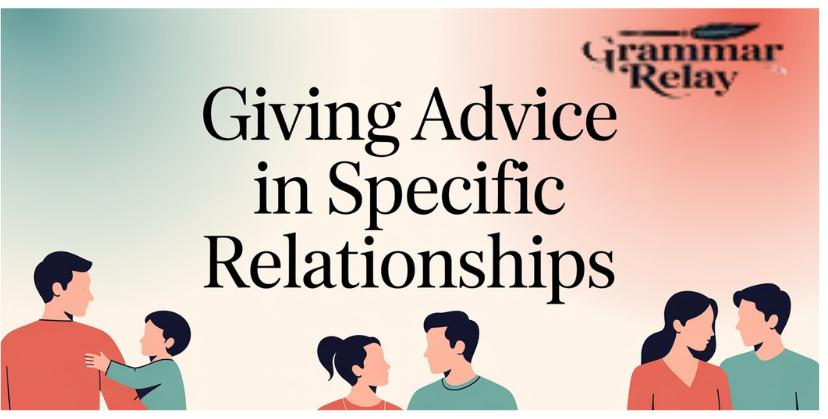
To a Friend
Friendship makes honesty easier but it also raises the stakes. When giving someone advice who’s a close friend, you can be more direct. But directness without warmth still lands as criticism.
Lead with care. End with their autonomy. “I’ll support whatever you decide I just wanted you to have my honest take.”
To a Partner or Spouse
Intimate relationships are where advice-giving goes wrong most often. Partners can easily slip into a parent-child dynamic one person always advising, the other always receiving. That imbalance breeds resentment.
The fix: ask more, advise less. Even when you know the answer, let them arrive at it themselves when possible.
To a Coworker or Employee
Professional environments require a lighter touch. Be clear and direct without being cold. And remember in a workplace context, giving advice upward (to a boss or senior colleague) carries different risks than giving it downward.
Know your lane. Speak within it.
To a Parent or Older Family Member
This is often the trickiest dynamic of all. Cultural expectations, generational gaps, and years of established roles make advice across generations a minefield.
Lead with respect. Frame suggestions as questions. “Have you ever tried…?” lands softer than “You should…” every time.
When Your Advice Gets Ignored
It stings. You gave your best thinking. They didn’t take it. And maybe infuriatingly things went exactly as you predicted.
Here’s the hard truth: your job ends when the advice is given. The outcome is not yours to control. Holding onto it creates resentment on your side and pressure on theirs.
Release it. If they come back later wanting to revisit it, be gracious. Don’t say “I told you so.” That phrase has ended more relationships than almost any other.
How to Handle Unsolicited Advice Gracefully
You’ll receive bad advice. Probably often. Here’s how to handle it without burning bridges.
When it’s well-meaning:
“Thanks for thinking of me I’ll keep that in mind.”
Simple. Non-committal. Warm enough to not cause offense.
When it crosses a line: Be firm without being hostile. “I appreciate you, but I’m not looking for input on this one.” Said calmly, once, it usually works. If the behavior repeats, that’s a boundary conversation, not an advice conversation.
When it’s actually useful: Stay open. Some of the best insights come uninvited. Separate the delivery from the content someone can be annoying and right at the same time.
What Makes Someone a Trusted Advisor

“The wise don’t need to give a lot of advice. People just keep coming back to them.”
The people others turn to consistently share a few key traits:
- They keep confidences. Nothing kills trust faster than gossip.
- They say “I don’t know” freely. Intellectual honesty is magnetic.
- They remember details. Follow up questions “How did that conversation go?” signal genuine investment.
- They empathize before they strategize. Feelings first. Solutions second. Always.
This connects directly to the idea of godly advice and bible advice wisdom rooted in humility, patience, and genuine care for others. Proverbs 12:15 puts it plainly: “The way of fools seems right to them, but the wise listen to counsel.” The wisest advisors are, first and foremost, great listeners.
Quick Reference Summary
| Situation | What to Do |
|---|---|
| Someone vents but doesn’t ask | Listen. Stay quiet. |
| Someone asks your opinion | Ask clarifying questions first |
| You feel the urge to jump in | Pause. Ask yourself why. |
| Your advice gets ignored | Release it. It’s not yours to control. |
| You receive unwanted advice | Acknowledge briefly, move on. |
Good Advice Is Rare: Be Someone Who Gives It Well
To give advice well isn’t about being the smartest person in the room. It’s about being the most present. The most patient. The most willing to put someone else’s needs ahead of your own need to be heard.
That’s a rare quality. But it’s learnable.
Start small. Next time someone brings you a problem, ask before you advise. Listen longer than feels comfortable. Offer options, not orders. And when they don’t take your advice let it go.
Frequently Asked Questions About Giving Advice
What is unsolicited advice?
Unsolicited advice is any guidance, opinion, or suggestion you offer when nobody asked for it. It can be well-meaning but often lands as criticism because it implies the other person is missing something you already know.
Why do people give unsolicited advice?
Motives vary widely. Some people genuinely want to help. Others do it out of habit, neediness, or a subconscious desire to feel superior. Understanding your own motive before speaking is half the battle.
How do you give advice without offending someone?
Always ask permission first. Try: “Would it help if I shared what’s worked for me?” That one question shifts the entire dynamic you’re no longer intruding, you’re being invited in.
What’s the difference between good advice and bad advice?
Good advice is tailored, empathetic, and offered with the other person’s autonomy in mind. Bad advice is generic, self serving, or delivered without listening first.
How do you handle unsolicited comments from family?
Stay calm and keep it simple. “I appreciate you but I’ve got this one handled.” Firm, warm, and clear. If it becomes a pattern, that’s a boundary conversation worth having directly.
Is there a right time to give advice?
Yes, when someone asks for it. Outside of genuine safety concerns, waiting to be invited is almost always the right call. Timing matters as much as content.
What does the Bible say about giving advice?
Scripture takes advice seriously. Proverbs 19:20 says “Listen to advice and accept discipline, and at the end you will be counted among the wise.” Biblical or godly advice centers on humility, patience, and putting others’ needs ahead of your own desire to be heard principles that hold up in any context.
Read more grammar lessons on Grammar Relay
Conclusion
Most people think giving advice is about having the right answer. It isn’t.
The best advice givers aren’t the smartest or most experienced people in the room. They’re the ones who listen before they speak, who ask before they offer, and who respect the other person’s right to make their own choices even bad ones.
Here’s what it really comes down to:
- Earn the right to speak by listening first
- Ask permission before launching into advice
- Tailor everything to their situation, not yours
- Release the outcome your job ends when the words leave your mouth
- Show up consistently trust is built over time, not in one conversation
Whether you’re navigating a tough conversation with a friend, a partner, a colleague, or a family member the principles don’t change. People don’t need you to fix them. They need to feel heard, respected, and supported.
That’s the real art of how to give advice well. Not a perfect solution delivered at the right moment but a steady presence that people can trust over time.
