

Every professional has typed “please let me know” at least a hundred times. It’s the email equivalent of a firm handshake. Reliable. Familiar. But after a while, it starts feeling like a rubber stamp rather than a real request.
Here’s the truth: the phrase still works. But using it in every single email quietly signals that you’re not putting much thought into your communication. And in competitive professional environments, that matters more than people realize.
Whether you need a sharper close for an executive email or a friendlier sign-off for a team message, this guide gives you 50+ real alternatives. Every phrase comes with context, tone guidance, and real examples you can use today.
What Does “Please Let Me Know” Actually Mean?
On the surface, it’s simple. You’re asking someone to respond, update you, or share information. But the phrase carries implied meaning too. It signals openness, patience, and a kind of professional deference.
The problem? That same deference can sometimes read as vague or weak. “Please let me know” doesn’t tell anyone what you need, when you need it, or why it matters. It puts all the interpretive work on the reader.
Understanding how to say please let me know professionally starts with recognizing this gap. Precision and warmth together make a far stronger request than politeness alone.
When Should You Use an Alternative?
Not every email needs a reinvention. But there are specific moments when swapping the phrase pays off.
- When you need a decision, not just a reply. “Please let me know” is too open-ended for time-sensitive decisions.
- When you’re writing to senior leadership. A more deliberate phrase signals that you respect their time and know exactly what you’re asking.
- When following up a second or third time. Repeating the same close feels increasingly hollow with each email.
- When building a client relationship. Clients notice language that feels personal and considered.
- When you need to express genuine availability. Phrases like please let me know if you need anything or let me know if you need anything else land warmer than the generic default.
Is “Please Let Me Know” Still Professional?
Yes, absolutely. Context is everything. In a quick internal email or a casual team thread, it’s perfectly fine. Nobody’s going to flag you for it.
However, relying on it as your only closing phrase is where things get shaky. Communication researchers at places like Harvard Business Review consistently point out that specificity in professional requests increases response rates significantly. Vague asks get vague responses or none at all.
The phrase sits in a gray zone. It’s polite but passive. It’s professional but predictable. Knowing how to say let me know professionally with more precision gives you a real edge in daily communication.
Formal Synonyms for High-Stakes Professional Communication
These phrases work when the stakes are high and the audience expects precision.
| Phrase | Tone | Best Used In |
|---|---|---|
| Please advise at your earliest convenience | Assertive, formal | Executive and legal emails |
| Kindly notify me upon any changes | Polite, structured | Client and compliance communication |
| I would appreciate your prompt response | Direct, professional | Time-sensitive requests |
| Please inform me accordingly | Neutral, formal | Policy or procedural emails |
| Kindly revert with your decision | Formal, concise | Approval requests |
| Please communicate any relevant updates | Clear, professional | Project stakeholder updates |
| Your response at your earliest convenience would be appreciated | Deferential | Upward communication |
| I welcome your guidance on this matter | Open, respectful | Mentorship or senior leadership |
Example in context: Instead of “Please let me know what you think,” try: “I would appreciate your guidance on the proposed direction before we proceed.”
That one shift transforms a passive request into a focused, professional ask.
Read more about “Thank You for Your Time and Consideration”
Semi-Formal Synonyms for Everyday Workplace Emails
Most professional communication lives here. Not stiff. Not casual. Just clean and clear.
- Feel free to update me when you can. Removes pressure while still making the ask.
- I’d appreciate being kept in the loop. Works especially well for ongoing projects.
- Please keep me posted on this. Friendly and widely understood across industries.
- Let me know how you’d like to proceed. Puts the decision in their hands respectfully.
- I’d value your feedback here. Signals that their opinion genuinely matters.
- Please share any updates when available. Clean and professional without being stiff.
- I’d love to hear your thoughts on this. Warmer than the default. Works well peer-to-peer.
- Do keep me updated as things develop. Slightly more formal but still approachable.
These are your everyday workhorses. Rotate through them and your emails will feel noticeably more considered.
Casual but Professional Synonyms for Team and Colleague Communication
Sometimes the best please let me know synonym is one that doesn’t sound like a phrase at all. It sounds like a person.
- Just loop me in when you know more.
- Keep me in the know on this one.
- Shoot me a message when you’re ready.
- Let me know where you land on this.
- Drop me a line when you get a chance.
- Flag me when there’s an update.
- Circle back with me when you can.
- Let me know how it goes.
- Feel free to ping me anytime.
These work great in Slack, Teams, or quick reply emails. They signal approachability without sacrificing professionalism.
Context-Specific Alternatives by Situation
When You Need a Decision Made
Generic phrases stall decisions. Specific phrases accelerate them.
Try: “Could you confirm your preferred direction by Thursday so we can move forward?” or “Please advise on the attached options at your earliest convenience.”
The combination of a clear ask and a soft deadline does the heavy lifting.
When You’re Waiting on Feedback
Please let me know what you think is a classic but it’s doing minimal work. Instead, try:
- “I’d love your honest take on this before we finalize.”
- “Your feedback on Section 2 especially would be really valuable.”
Specific feedback requests get specific responses. Every time.
When Following Up After a Meeting
Post-meeting emails are where vague closes do the most damage. Replace “please let me know” with:
- “Let me know if the action items from today look correct to you.”
- “Please confirm you’re aligned on the next steps outlined above.”
When Offering Help or Support
This is where please let me know if you need anything else and please let me know if anything else is needed earn their place. They’re genuine and open.
But you can add warmth by being specific: “If any questions come up as you review this, I’m happy to jump on a quick call.”
That’s not a template. That’s a real offer.
When You Need a Status Update
- “Could you share a quick status update when you get a moment?”
- “Please keep me posted on where this stands.”
- “I’d appreciate a brief update by end of week if possible.”
Direct. Polite. Specific.
When Communicating With Senior Leadership
Writing up the chain requires more care. Avoid anything that sounds demanding or overly casual. Instead:
- “I welcome your thoughts when your schedule allows.”
- “Please advise on the best path forward at your convenience.”
- “I’d appreciate your perspective on this when you have a moment.”
When Writing to Clients or External Partners
Clients deserve the warmest version of professional. Try:
- “Please don’t hesitate to reach out if anything needs clarification.”
- “Please let me know if you need anything” works perfectly here because it signals service without being subservient.
- “I’m happy to assist with anything else that comes up.”
Phrases to Absolutely Avoid
Some phrases have the opposite effect of what you intend. Watch out for these:
- “As per my last email…” Passive-aggressive, full stop.
- “Please do the needful.” Outdated and vague in most Western professional contexts.
- “Revert back to me.” Grammatically redundant. Just say “respond” or “reply.”
- “Please let us know your thoughts going forward.” Wordy and noncommittal.
- “Awaiting your revert.” Impersonal and stiff.
Good communication cuts friction. These phrases add it.
You might be interested in 60+ Goodbye Phrases for Coworkers
How Tone Changes Everything: A Real Case Study
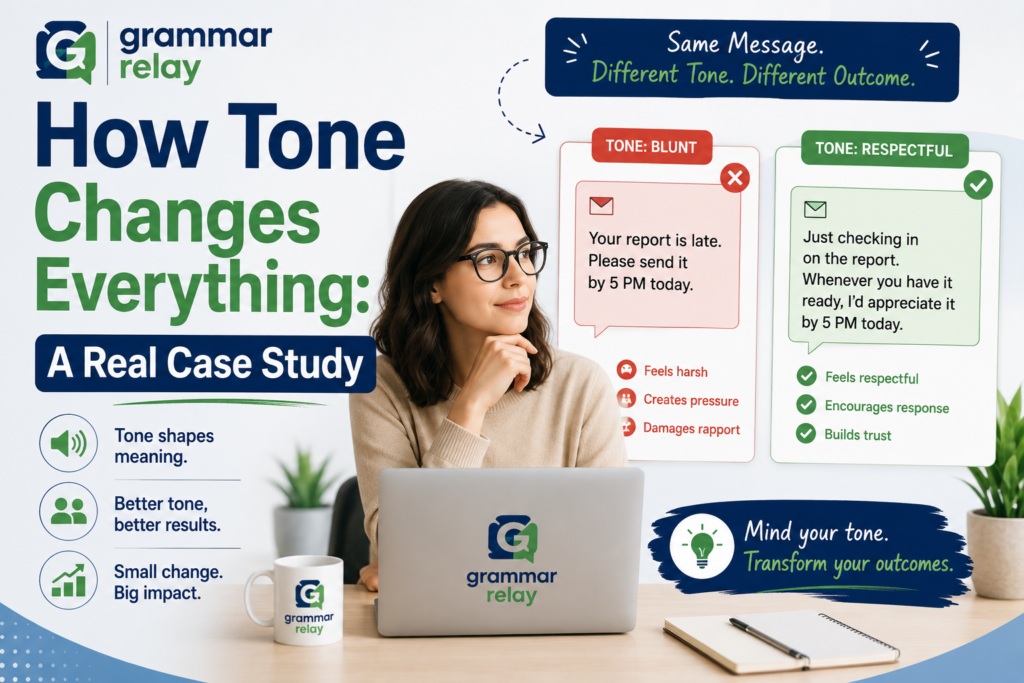
Consider two versions of the same email close:
Version A: “Please let me know.”
Version B: “Could you share your thoughts on the proposal by Friday? I want to make sure we’re aligned before the client call.”
Same intent. Completely different impact. Version B tells the reader what you need, when you need it, and why it matters. Response rates for specific, deadline-anchored requests are measurably higher according to research on workplace communication.
Version A leaves everything up to interpretation. Version B leaves nothing to chance.
Quick Reference Comparison Table
| Phrase | Tone | Setting | Formality |
|---|---|---|---|
| Please advise | Assertive, formal | Executive emails | Very High |
| Kindly keep me informed | Polite, structured | Client communication | High |
| I’d appreciate your feedback | Warm, inviting | Peer collaboration | Medium |
| Keep me posted | Casual, friendly | Team messages | Low |
| Flag me when there’s an update | Direct, modern | Slack or internal email | Low-Medium |
| Please inform me accordingly | Neutral, stiff | Legal or compliance | Very High |
| Let me know how it goes | Relaxed, genuine | Colleague check-ins | Low |
| Please let me know if you need anything else | Warm, open | Client service emails | Medium |
How to Write a Request That Always Gets a Response
Three elements make any professional request land well:
- Clarity. What exactly do you need?
- Context. Why does it matter?
- A soft deadline. When do you need it by?
Most people include one of the three. The strongest communicators include all three.
Weak: “Please let me know what you think.”
Strong: “Could you share your feedback on the draft by Wednesday? I want to incorporate your suggestions before the final version goes out.”
That’s the formula. Simple and devastatingly effective.
Frequently Asked Questions
Is “Please Let Me Know” too informal for business emails?
Not at all. It’s appropriate in most contexts. The issue isn’t the phrase itself but overusing it when something more specific would serve better.
What’s the most professional way to ask for an update?
“Please advise on the current status at your earliest convenience” works well in formal settings. For everyday use, “could you share a quick update when you get a moment?” hits the right note.
How do I ask for a response without sounding pushy?
Pair your request with a reason. “I’d love your thoughts on this before Thursday’s meeting” feels collaborative rather than demanding.
Can I use these phrases in spoken conversation?
Absolutely. Phrases like “let me know what you think” and “please let us know” sound completely natural out loud.
What’s the best phrase for a senior manager?
“I welcome your guidance when your schedule allows” strikes the right balance of respect and clarity.
How do I follow up when someone hasn’t responded?
Keep it brief and warm. “Just circling back on my previous message. Please let me know if you need anything from my side to move forward.”
Read more grammar lessons on Grammar Relay
Conclusion
The phrase you choose at the end of an email is a small thing. But small things compound. Communicators who choose their words deliberately stand out in every inbox, every meeting, and every professional relationship they build.
You don’t need to overhaul your entire communication style overnight. Start with one or two alternatives from this list. Test them. Notice how people respond differently when your ask is specific, warm, and clear.
Language is one of the few professional tools that costs nothing to sharpen and pays dividends every single day.
