


Here’s the grammar question that catches writers mid-sentence and makes them second-guess everything. You’re typing a report, drafting an email, or writing a news article and suddenly you freeze. There has been or there have been? One tiny word choice. One surprisingly easy rule. And yet it trips up native speakers and ESL learners alike every single day.
The good news? Once you understand the single principle driving this choice, you’ll never hesitate again.
The One-Sentence Rule That Resolves Every Confusion
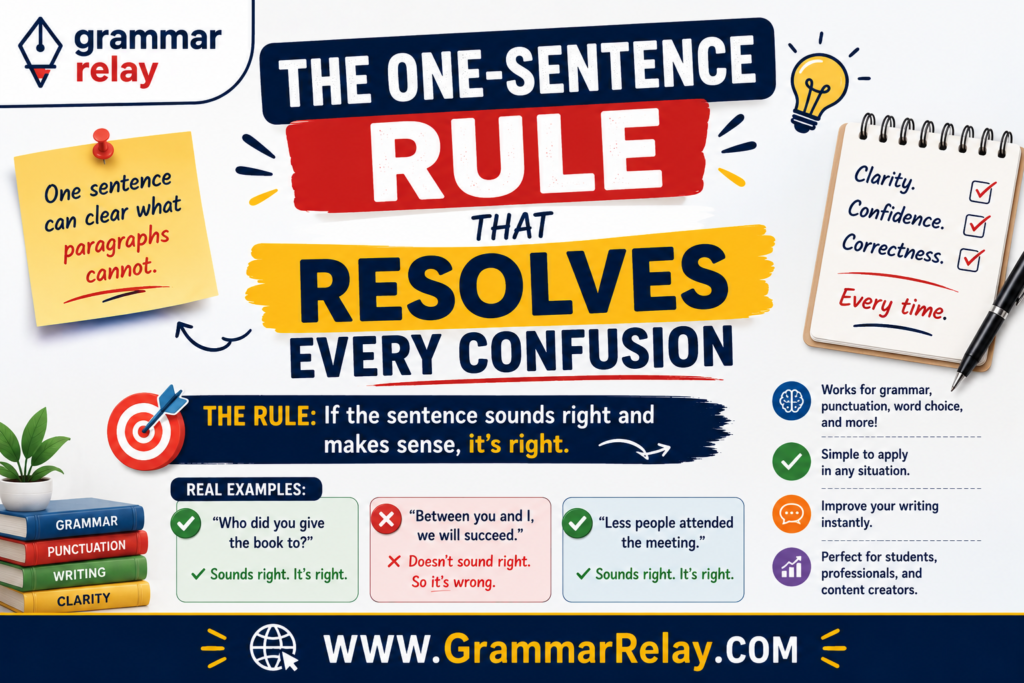
Skip “there.” Find the real noun. Match your verb to that noun.
“There” in these constructions isn’t a location. It’s a grammatical placeholder, a dummy subject that holds the sentence together while the actual subject hides further along. The verb agrees with that real subject, not with “there” itself.
| Construction | Real Subject | Correct Form | Example |
|---|---|---|---|
| There + singular noun | A problem | There has been | “There has been a delay.” |
| There + plural noun | Several issues | There have been | “There have been several delays.” |
| There + uncountable noun | Progress | There has been | “There has been significant progress.” |
| There + compound (and) | A rise and a fall | There have been | “There have been a rise and a fall in prices.” |
Has been pairs with singular and uncountable nouns. Have been pairs with plural nouns. That’s the complete rule. Everything else in this guide builds on that foundation.
What “There Has Been” and “There Have Been” Actually Mean
Before diving deeper into there has been or there have been, it’s worth understanding what these phrases actually communicate and why English uses “there” as a placeholder in the first place.
The existential “there” introduces the existence or occurrence of something. It doesn’t point to a location. “There has been a problem” doesn’t tell you where the problem is. It announces that a problem exists or occurred.
The “has/have been” part is a present perfect construction: have or has plus the past participle “been.” This tense connects the past to the present in a way that simple past doesn’t.
| Tense | Form | What It Communicates | Example |
|---|---|---|---|
| Simple past | There was/were | Completed event, no current relevance | “There was a problem yesterday.” |
| Present perfect | There has/have been | Past event with current relevance | “There has been a problem.” |
| Past perfect | There had been | Earlier past before another past event | “There had been no warning.” |
| Future perfect | There will have been | Event completed before a future point | “There will have been three meetings by noon.” |
The present perfect signals that something happened in the past AND still matters now. “There has been a change in policy” implies the change affects the current situation. “There was a change in policy” simply records a historical fact.
The Grammar Engine: Subject-Verb Agreement With “There”
This is where has been vs have been becomes a pure subject-verb agreement question. The challenge is that the subject comes AFTER the verb in these constructions, which reverses the normal English word order.
Normal order: Subject + verb (“The delays have been significant.”) Existential “there”: There + verb + subject (“There have been significant delays.”)
| Subject Type | Example Subject | Correct Verb | Example Sentence |
|---|---|---|---|
| Singular countable | A mistake | Has been | “There has been a mistake in the report.” |
| Plural countable | Several mistakes | Have been | “There have been several mistakes.” |
| Uncountable noun | Evidence | Has been | “There has been no evidence presented.” |
| Collective noun (as unit) | A committee | Has been | “There has been a committee formed.” |
| Compound subject (and) | A rise and a fall | Have been | “There have been a rise and a fall in prices.” |
| Compound subject (or/nor) | One or two | Nearest subject | “There has been one or two errors.” |
The or/nor rule trips up even experienced writers. When two subjects connect with “or” or “nor,” the verb agrees with the subject closest to it. “There has been neither a response nor updates” takes “has been” because “response” (singular) sits nearest to the verb.
Read more about I Look Forward to Working With You: 50+ Ways to Say It Right
“There Has Been” in Depth: Every Context Where It Applies
Handles singular countable nouns and all uncountable nouns. Uncountable nouns are particularly important because they generate so many real writing errors.
| Uncountable Noun | Example Sentence |
|---|---|
| Progress | “There has been significant progress in the negotiations.” |
| Evidence | “There has been no evidence of wrongdoing.” |
| Research | “There has been extensive research on this topic.” |
| Damage | “There has been considerable damage to the infrastructure.” |
| Growth | “There has been steady growth in the sector over three years.” |
| Concern | “There has been growing concern among residents.” |
| Debate | “There has been debate about this policy for years.” |
| Change | “There has been a dramatic change in public opinion.” |
Notice how every uncountable noun above takes “has been” regardless of how large or significant the thing being described is. “There has been enormous progress” uses “has been” not because progress is small but because progress is uncountable.
“Grammar is the logic of speech, even as logic is the grammar of reason.” — Richard Chenevix Trench
In formal reports and official communications, there has been appears constantly before uncountable nouns: “There has been no breach of protocol,” “There has been an increase in activity,” “There has been considerable interest from investors.”
“There Have Been” in Depth: Every Context Where It Applies
There have been handles all plural countable nouns. The noun must be both countable AND plural to take “have been.”
| Context | Example Sentence | Notes |
|---|---|---|
| Multiple events | “There have been three earthquakes this month.” | Countable plural events |
| Historical | “There have been many revolutions in French history.” | Plural historical events |
| Legal/official | “There have been numerous complaints filed.” | Formal plural usage |
| Journalism | “There have been reports of widespread flooding.” | Plural reports |
| Science | “There have been breakthrough discoveries in the field.” | Plural discoveries |
| Everyday | “There have been too many meetings this week.” | Casual plural usage |
“Have been or has been” in journalism deserves special attention. News writing uses both forms constantly and getting them wrong undermines credibility. “There have been three confirmed deaths” (plural, countable) and “There has been significant loss of life” (uncountable) both appear in the same news story and both are correct.
“There Had Been”: The Past Perfect Form Most Articles Ignore
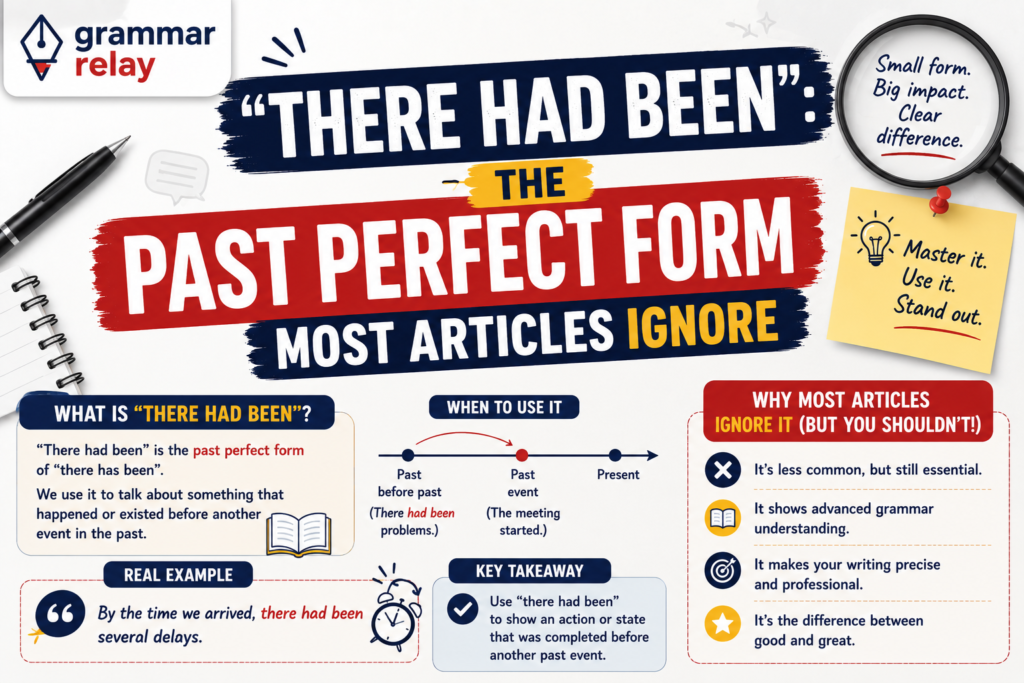
Most grammar guides on there has been or have been skip this form entirely.
| Situation | Example | Why “Had Been” |
|---|---|---|
| Before a past event | “There had been no warning before the storm hit.” | Warning preceded the storm |
| In reported speech | “She said there had been a problem.” | Backshift in indirect speech |
| In conditional sentences | “If there had been more time, we’d have finished.” | Hypothetical past condition |
| Establishing timeline | “There had been three failed attempts before the breakthrough.” | Sequence of past events |
The key signal for “had been”: look for a second past event in the sentence or implied context. “There had been warnings” tells you those warnings came before something else that already happened in the past.
Questions and Negative Forms: Has There Been vs Have There Been
Has there been any change? Have there been any updates? Question formation flips the subject and auxiliary verb while keeping the same agreement rules.
| Form | Singular Example | Plural Example |
|---|---|---|
| Affirmative | “There has been a change.” | “There have been changes.” |
| Negative | “There hasn’t been a change.” | “There haven’t been any changes.” |
| Question | “Has there been a change?” | “Have there been any changes?” |
| Tag question | “There has been a delay, hasn’t there?” | “There have been delays, haven’t there?” |
| Negative question | “Hasn’t there been enough time?” | “Haven’t there been enough warnings?” |
“Has there been any” is one of the most common question patterns in professional English. “Has there been any progress on the proposal?” “Has there been any response from the client?” Both use “has” because “progress” and “response” are uncountable nouns.
Tricky Cases That Catch Even Experienced Writers
Some constructions create genuine uncertainty even for proficient writers. These specific patterns generate the most real-world errors.
| Tricky Construction | Correct Form | Reason |
|---|---|---|
| “A number of problems” | Have been | “Number of” + plural noun = plural verb |
| “The number of problems” | Has been | “The number” is singular |
| “A variety of options” | Have been | Treats variety as plural in practice |
| “A lot of work” | Has been | “Work” is uncountable |
| “A lot of issues” | Have been | “Issues” is plural countable |
| “Some progress” | Has been | “Progress” is uncountable |
| “Some delays” | Have been | “Delays” is plural countable |
The “a number of” vs “the number of” distinction is the trickiest pair here. “A number of complaints have been filed” (plural because “a number of” signals plurality) versus “The number of complaints has been rising” (singular because “the number” is the subject). This distinction appears in legal writing, academic papers, and business reports constantly.
You might be interested in In the Street or On the Street: The Complete Guide
The Informal Contraction “There’s Been”: Is It Correct?
Here’s something competitors universally ignore. In spoken English and casual writing, “there’s been” appears constantly before BOTH singular and plural nouns.
| Usage | Acceptable? | Context | Example |
|---|---|---|---|
| “There’s been a problem.” | Yes | All contexts | Contraction of “there has been” |
| “There’s been problems.” | Informal only | Casual speech/text | Technically incorrect but common |
| “There’s been many issues.” | No | Any formal context | Always expand and correct |
| “There’s been a rise in cases.” | Yes | All contexts | Singular subject, correct |
“There’s been” is a contraction of “there has been” so it technically only applies to singular and uncountable subjects. However in natural speech, native speakers routinely say “there’s been a few problems” or “there’s been delays” without anyone flinching. The key rule: never use “there’s been” before plural nouns in formal writing. Expand it to “there have been” and agreement becomes explicit and correct.
“There Has Been” vs “There Have Been” Across Writing Registers
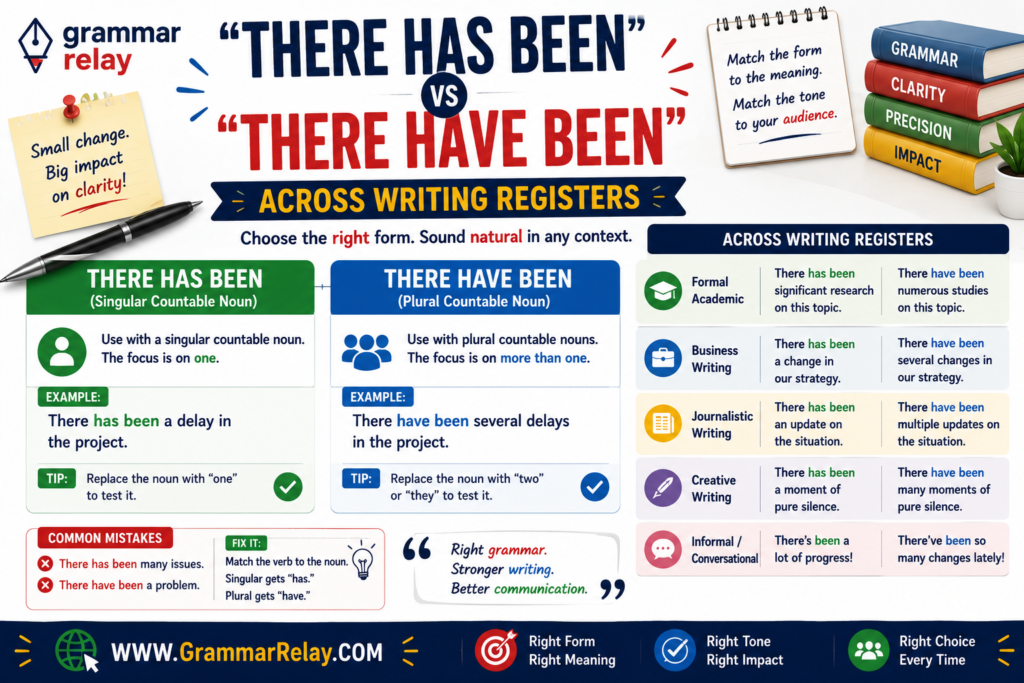
Have been or has been selection also depends on the register you’re writing in.
| Writing Register | Preferred Approach | Common Example |
|---|---|---|
| Academic | Strict agreement rules | “There has been substantial research indicating…” |
| Business reports | Formal, precise | “There have been three instances of non-compliance.” |
| Journalism | Agreement with clear subject | “There have been reports of…” |
| Legal documents | Precise, unambiguous | “There has been no breach of contract.” |
| Casual conversation | Slightly relaxed | “There’s been a few issues.” (accepted informally) |
| Fiction | Stylistic flexibility | Depends on narrator voice |
Academic writing is where getting there have been or has been wrong causes the most damage. Journal reviewers and academic editors notice subject-verb agreement errors immediately and they signal careless writing regardless of how strong the research itself is.
Common Mistakes Writers Make
| Incorrect | Correct | Why |
|---|---|---|
| “There have been a significant increase.” | “There has been a significant increase.” | “Increase” is singular |
| “There has been many complaints.” | “There have been many complaints.” | “Complaints” is plural |
| “There’s been several errors in the report.” | “There have been several errors in the report.” | Formal writing needs full agreement |
| “There were been delays.” | “There have been delays.” | “Were been” is never grammatically possible |
| “There has been a number of issues.” | “There have been a number of issues.” | “A number of” takes plural verb |
The most common error by far: using “has been” with plural nouns. “There has been many changes” appears in professional emails, reports, and presentations constantly. The fix is instant: find “changes” (plural), switch to “have been.”
Memory Tricks That Make the Rule Automatic
Three anchors that make there has been or there have been automatic:
The “is/are” parallel: This is the most reliable memory device available. “There has been” mirrors “there is.” “There have been” mirrors “there are.” If you’d say “there is a problem,” you write “there has been a problem.” If you’d say “there are problems,” you write “there have been problems.” Same agreement logic, same nouns, different tense.
The real subject test: Cover “there” with your finger. Read the rest of the sentence. The subject jumps out immediately and the correct verb form follows naturally. “__ has/have been a significant delay.” The subject is “delay” (singular) so “has been” is correct.
The count test: Can you put a number directly before the noun? “Three delays” works so “delays” is countable plural and takes “have been.” “Three progress” doesn’t work so “progress” is uncountable and takes “has been.”
Frequently Asked Questions
What is the difference between “there has been” and “there have been”?
“There has been” pairs with singular and uncountable nouns. “There have been” pairs with plural countable nouns. The verb agrees with the real subject following “there,” not with “there” itself.
Which is correct with uncountable nouns: “there has been” or “there have been”?
Always “there has been.” Uncountable nouns like progress, evidence, research, damage, and growth always take singular verb agreement. “There has been significant progress” is always correct.
Is “there’s been” grammatically correct before plural nouns?
In formal writing, no. “There’s been” is a contraction of “there has been” and should only precede singular or uncountable nouns. In casual spoken English, “there’s been a few issues” is widely accepted but avoid it in any professional or academic document.
When should I use “there had been” instead of “there has been”?
Use “there had been” when describing a situation that existed before another event that also happened in the past. “There had been three warnings before the incident occurred” places the warnings before the incident in a past timeline.
What’s the question form of “there has been”?
Invert the subject and auxiliary: “Has there been any update?” For plural: “Have there been any changes?” The same agreement rules apply in question form.
Is “there has been a number of” correct?
No. “A number of” signals plurality and takes “have been.” The correct form is “there have been a number of issues.” However “the number of issues has been rising” is correct because “the number” is the singular subject.
Read more grammar lessons on Grammar Relay
Conclusion
There has been or there have been comes down to one decision made once.
Find the real subject hiding after “there.” If it’s singular or uncountable, use has been. If it’s plural, use have been. Apply the same logic to questions, negatives, and past perfect constructions and you’ve covered every situation this phrase appears in.
The parallel with “there is/there are” makes the rule permanently memorable. The count test makes it instant. And understanding why “there’s been” causes problems in formal writing saves you from an error that appears more often than it should in professional documents.
