

Let’s be honest. “Think outside the box” has been said so many times in boardrooms, cover letters, and team meetings that it’s basically lost its meaning entirely. When everyone uses the same phrase to describe creativity, the phrase itself stops feeling creative. So if you’re looking for a thinking outside the box synonym that actually lands with impact, you’re in the right place.
What Does “Think Outside the Box” Actually Mean?

The phrase has a surprisingly specific origin. Back in the 1970s and 1980s, management consultants used a classic puzzle in corporate training sessions called the nine-dot puzzle. The challenge involves connecting nine dots arranged in a three-by-three grid using only four straight lines without lifting your pen. The catch? You have to draw lines that extend beyond the square shape the dots create. Solving it requires thinking outside the literal box formed by the dots.
That’s where the metaphor comes from. It spread rapidly through business culture and by the 1990s had become standard workplace vocabulary. By the 2000s, it had become so common that management thinkers were already calling it one of the most overused phrases in professional communication.
Today, saying “think outside the box” in a formal document or job application can actually work against you. It signals that you’re reaching for a familiar phrase rather than demonstrating the original thinking the phrase is supposed to describe. There’s a certain irony in that.
When the Phrase Works and When It Doesn’t
Situations Where It Still Fits
Not every context calls for a polished synonym. In casual team conversations, informal brainstorming sessions, or quick verbal exchanges, “think outside the box” still communicates the idea fast and without confusion. If you’re chatting with a colleague and say, “Let’s think outside the box on this one,” nobody’s going to wince. The phrase does its job in low-stakes, conversational moments.
Situations Where a Stronger Alternative Serves You Better
Formal writing is a different story. If you’re crafting a resume, cover letter, leadership report, creative brief, or academic paper, a more precise phrase will almost always serve you better. Hiring managers, clients, and senior leaders read thousands of documents and they notice when someone reaches for a cliché instead of a concrete description of what they actually did or mean.
The same applies to marketing copy, brand messaging, and any writing where you’re trying to stand out rather than blend in.
Read more about Imminent vs Eminent: What’s the Real Difference?
Outside the Box Synonyms for Professional and Formal Writing
These alternatives carry weight in formal contexts. Each one sounds deliberate rather than borrowed, and they give your writing more specificity and authority. These are genuinely distinct phrases, not just minor rewrites of the same idea.
Challenge conventional thinking This phrase works when you’re describing a mindset or approach that actively pushes back against established norms. Use it when the idea isn’t just new but deliberately contrarian. Example: “The team challenged conventional thinking by scrapping the original launch strategy entirely.”
Adopt a fresh perspective Softer and more collaborative in tone, this one suits situations where the goal is to encourage open-mindedness rather than disruption. Example: “Adopting a fresh perspective on the data led to an unexpected and more effective solution.”
Reimagine the approach This phrase works well in creative and strategic contexts. It implies not just tweaking but fundamentally rethinking how something gets done. Example: “Rather than patching the old system, the developers reimagined the approach from the ground up.”
Apply unconventional problem-solving More specific and skills-focused, this alternative works particularly well on a resume or in a performance review. It describes what you did rather than just how you thought. Example: “She applied unconventional problem-solving to cut the project timeline by three weeks.”
Think beyond traditional frameworks This is the word for thinking outside the box when you’re writing for an academic or research audience. It positions the thinker as someone aware of existing structures and consciously moving past them. Example: “Effective leaders think beyond traditional frameworks when market conditions shift rapidly.”
Explore alternative strategies Practical and action-oriented, this phrase fits business reports, project plans, and proposals well. It suggests a methodical willingness to look at options that aren’t immediately obvious. Example: “Faced with supply chain delays, the operations team explored alternative strategies to keep production on schedule.”
Demonstrate innovative reasoning This is another way to say think outside the box when you want to emphasize the intellectual process rather than just the outcome. It sounds strong in formal writing without feeling inflated. Example: “The proposal demonstrated innovative reasoning that impressed the selection committee.”
Casual and Conversational Alternatives
Not everything needs to sound polished. For team meetings, internal messages, or day-to-day conversations, these phrases communicate the same idea in a warmer and more natural way.
- Break the mold: implies doing something that departs from the expected pattern
- Go against the grain: suggests deliberately choosing the unconventional path
- See it from a different angle: encourages shifting perspective without jargon
- Rethink the usual approach: practical and direct, works well in verbal settings
- Try something unconventional: simple and honest, no pretense required
These work well when you want to sound approachable rather than authoritative. If you’re a manager encouraging your team during a brainstorm, phrases like these keep the energy collaborative rather than corporate.
Creative and Expressive Alternatives for Writing, Branding, and Storytelling

When the goal is to inspire rather than instruct, you need language that sparks something in the reader. These alternatives work well in marketing copy, brand narratives, creative briefs, and storytelling contexts where the writing itself needs to model the kind of thinking it’s describing.
- Blaze a new trail: energetic and forward-moving, works well in brand positioning
- Push past the expected: challenges the reader directly, useful in advertising and calls to action
- Rewrite the rules: bold and slightly rebellious, fits disruptor brands and innovation narratives
- Color outside the lines: playful and accessible, another way to say thinking outside the box without any corporate stiffness
- Forge a different path: quieter and more deliberate in tone, suits long-form storytelling
As marketing strategist Bernadette Jiwa once wrote, “The brands that connect most deeply aren’t the ones that followed the formula. They’re the ones that rewrote it.” That’s exactly the energy these phrases are built to carry.
Comparison Table
Here’s a clean breakdown of the best outside of the box synonym options by tone, use case, and example:
| Phrase | Tone | Best Use Case | Example Sentence |
|---|---|---|---|
| Challenge conventional thinking | Formal | Reports, leadership writing | “She challenged conventional thinking on the board.” |
| Adopt a fresh perspective | Professional | Emails, proposals | “Adopt a fresh perspective on the user data.” |
| Reimagine the approach | Creative/Strategic | Briefs, pitches | “They reimagined the approach entirely.” |
| Apply unconventional problem-solving | Formal | Resumes, reviews | “He applied unconventional problem-solving throughout.” |
| Break the mold | Casual | Team meetings, Slack | “Let’s break the mold this quarter.” |
| Blaze a new trail | Expressive | Marketing, branding | “This campaign blazes a new trail.” |
| Color outside the lines | Playful | Creative writing | “Great designers color outside the lines.” |
| Rewrite the rules | Bold | Brand narratives | “It’s time to rewrite the rules.” |
You might be interested in Smelled vs Smelt: The Real Difference (And When to Use Each)
How to Choose the Right Alternative
Before picking a thinking outside the box synonym, ask yourself three quick questions.
Who is your audience?
A hiring manager reading a resume responds differently than a creative director reviewing a campaign concept. Match the phrase to the person reading it, not just the idea you’re trying to express.
What tone does the context require?
Formal writing needs formal language. Casual conversations need human language. Mismatching tone to context is one of the most common writing mistakes people make, and it often comes from defaulting to a familiar cliché rather than thinking about the reader.
Are you describing an action or inspiring one?
If you’re describing something that already happened, use phrases like “applied unconventional problem-solving” or “challenged conventional thinking.” If you’re trying to inspire someone to act, reach for something more energetic, like “push past the expected” or “forge a different path.”
Common Mistakes When Using These Phrases
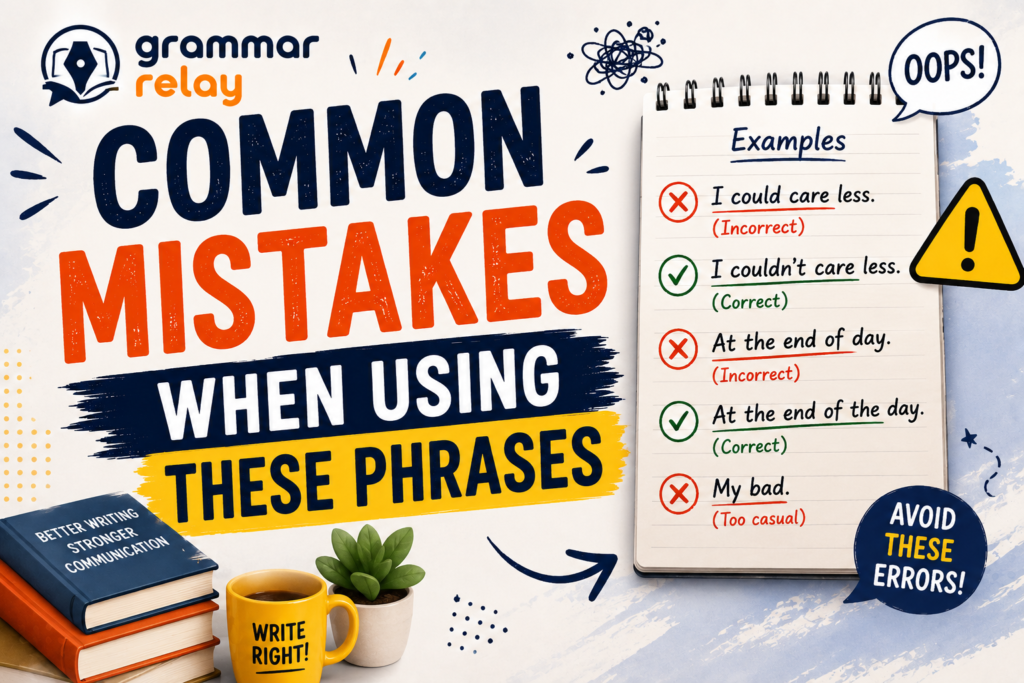
A few patterns come up often when writers try to move away from the original cliché:
- Swapping one cliché for another equally tired one. Replacing “think outside the box” with “push the envelope” or “game changer” doesn’t actually improve your writing. It just relocates the problem.
- Forcing formal alternatives into casual conversations. Telling your coworker during a quick chat that they should “demonstrate innovative reasoning” sounds stiff and off-putting. Save the formal phrases for formal writing.
- Using multiple synonyms in the same document. If your report uses “fresh perspective,” “unconventional problem-solving,” and “reimagine the approach” within three paragraphs of each other, it highlights the fact that you’re padding rather than communicating.
Quick Reference List
Here’s a fast-scan list of other ways to say think outside the box, organized by category:
Formal and Professional
- Challenge conventional thinking
- Apply unconventional problem-solving
- Think beyond traditional frameworks
- Demonstrate innovative reasoning
- Explore alternative strategies
Casual and Conversational
- Break the mold
- Go against the grain
- Rethink the usual approach
- See it from a different angle
- Try something unconventional
Creative and Expressive
- Blaze a new trail
- Rewrite the rules
- Color outside the lines
- Push past the expected
- Forge a different path
Frequently Asked Questions
Why is “think outside the box” considered a cliché?
Decades of overuse in business, academic, and marketing writing have stripped the phrase of its original energy. When a phrase appears in nearly every professional context imaginable, it stops communicating anything specific and starts reading as filler.
Which synonym works best in a resume or cover letter?
“Applied unconventional problem-solving” and “demonstrated innovative reasoning” both work well because they describe a skill rather than just an attitude. Employers respond better to phrases that point toward specific action.
Are these phrases suitable for leadership and management writing?
Yes, particularly “challenge conventional thinking,” “think beyond traditional frameworks,” and “reimagine the approach.” These carry authority without sounding inflated or vague.
How do I avoid sounding clichéd when describing creativity?
The best approach is to describe what you actually did rather than reaching for a metaphor. “Redesigned the onboarding process from scratch after identifying three friction points” communicates creative thinking far more effectively than any synonym for thinking outside of the box ever could.
Read more grammar lessons on Grammar Relay
Conclusion
“Think outside the box” isn’t a bad phrase. It’s just a tired one. When you replace it with a more precise, context-appropriate alternative, your writing immediately feels sharper and more intentional. Whether you need another word for think outside the box in a formal report, a casual team chat, or a bold piece of brand copy, the right phrase exists. You just need to match it to your audience, your tone, and what you’re actually trying to say.
